Executive Summary
A comparative technical analysis between hydraulic and traction-driven material elevators, examining capital cost, durability, safety, and maintenance overheads.
Comparing Hydraulic and Traction Hoisting Technologies
Industrial facility managers frequently face the decision between hydraulic vertical lifts and traditional traction cable elevators. While both have their applications, hydraulic goods lifts dominate industrial settings requiring high payload capacity and maximum uptime.
1. Payload Capacity & Structural Load Bearing
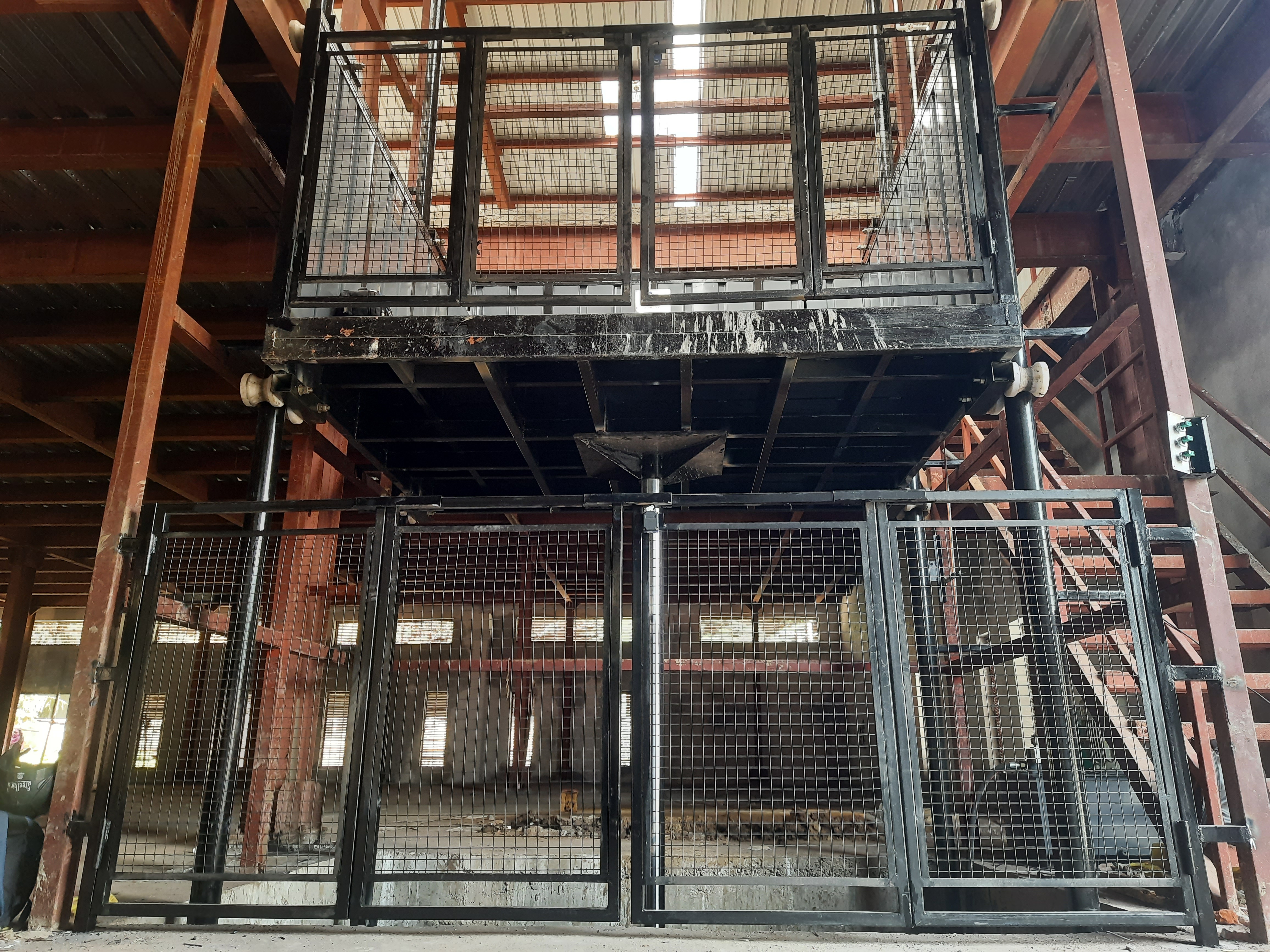
Hydraulic cylinders push loads directly from underneath or via rigid mast columns, transferring mechanical loads directly to the ground foundation rather than overhead building beams. This makes hydraulic lifts exceptionally suited for heavy payloads from 1 Ton to 25 Tons without requiring reinforced overhead machine rooms.
2. Comparative Breakdown
| Parameter | Hydraulic Goods Lift | Traction Cable Elevator |
|---|---|---|
| Max Heavy Payload | Exceptional (Up to 25+ Tons) | Limited in standard configurations |
| Overhead Machine Room | Not Required | Usually Required |
| Maintenance Complexity | Low (Fewer moving wear components) | High (Ropes, sheaves, counterweights) |
| Power Efficiency on Descent | Zero motor power during descent | Draws continuous power |
| Cost-Effectiveness | High ROI for 2 to 6 stories | High Initial & Maintenance Cost |
3. Energy Efficiency in Industrial Scenarios
One of the most notable engineering advantages of hydraulic systems is that downward descent is governed entirely by controlled gravity and valve modulation. The electric motor does not draw electrical power during downward travel, providing significant energy savings in facilities with frequent material unloading.